
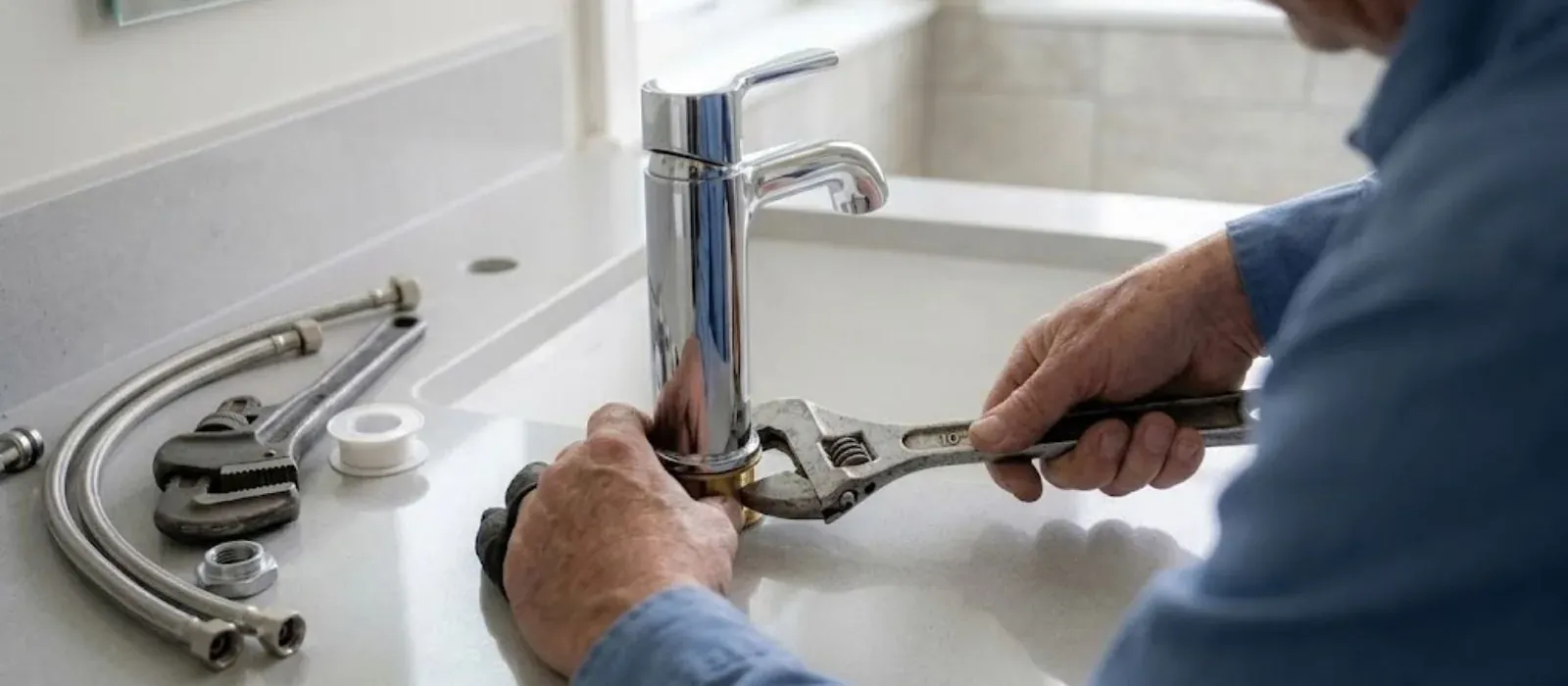
What a plumber is actually pricing
A faucet visit looks small, but several pieces sit inside the price. The plumber diagnoses the leak, shuts off water, takes the faucet apart and matches parts to your model. Time and parts follow, plus any surprises under the sink.
Because every house differs, an honest quote starts with a look. Be wary of any number given before someone knows the brand, the faucet type and the state of the valves.
| Factor | Why it changes the price |
|---|---|
| Faucet type | A single-handle cartridge faucet is quicker to service than a three-piece tub and shower valve. |
| Parts availability | Common cartridges are easy to source. Older or discontinued models may need special-order parts or a replacement. |
| Shutoff valves | If the valves under the sink will not close, the plumber must shut the main water off, or replace the valves first. |
| Access | Tight vanities, wall-mounted fixtures and tiled-in tub valves take longer to reach. |
| Fixture age and finish | Old corroded fittings can break during removal and turn a small repair into a bigger one. |
| Time of day | After-hours and weekend work is priced differently from a scheduled visit, so ask how the job is quoted. |
Most quotes combine a service call, labor for the repair and parts. Some plumbers price by the job and others by the hour, so ask which applies. Also ask whether the diagnosis fee is credited if you approve the work.
A good quote names the failing part and lists what is not included. If the plumber finds a corroded valve or a split supply line once the sink is open, you should hear about it and approve the change before it is added.
Repair or replace the faucet?
Repair makes sense when
- The faucet drips from the spout or handle
- It is a common brand with parts on hand
- The finish and body are in good shape
- You like the style and the flow
Replacement makes sense when
- The body is pitted, cracked or corroded
- Parts are discontinued or hard to find
- You have repaired the same faucet more than once
- You want a different style or a lower-flow model
A rule of thumb helps: if the repair parts cost a large share of a new faucet, replace it. Ask the plumber to compare both options in writing. Our faucet repair page lists common faults, and a swap is part of plumbing installation work.
Four faucet types and their usual faults
Compression
Two handles that you turn several times. A rubber washer wears and the spout drips. This is the easiest repair, though old seats may be pitted.
Ball
A single handle over a rounded cap. Springs, seals and the ball itself wear and cause leaks at the base. It has many small parts.
Cartridge
A single or double handle with a replaceable cartridge. Drips, stiff handles and weak temperature control point to a worn cartridge or its O-rings.
Ceramic disc
A quarter-turn style with ceramic plates inside a cylinder. It lasts longest, but grit or scale can cause drips and stiffness.
What to do if a faucet or supply line is spraying water
- Close the shutoff valves under the sink by turning them clockwise.
- Shut the main water valve if the shutoffs will not close.
- Turn off power to outlets near the water if you can do so safely.
- Mop up and take photos so you have a record.
- Call a licensed plumber if any valve will not close.
The standard behind faucet work
Connecticut's 2022 State Building Code adopts the 2021 International Plumbing Code (IPC), and the Connecticut Department of Consumer Protection says plumbing work needs a current state license. Use the eLicense lookup to check before you hire.
Dripping faucet or a valve that will not shut?
A licensed plumber can find the failing part, explain repair and replacement and give you a clear price before work starts. Call (860) 397-8103 to book, with same-day appointments when available.
Shutoff valves: the quiet cost multiplier
The valves under the sink are what let a plumber work without turning off the whole house. In older homes they stick, weep or crumble when turned. Census Bureau estimates for 2020 to 2024 put about 25 percent of Farmington homes before 1960, so a stuck valve is a real possibility.
If a valve will not close, the plumber has two choices: shut the main valve and work fast, or replace the valve first. The second adds a line to the quote but gives you a working shutoff for the next repair.
A valve that will not shut is an emergency
If water will not stop at a faucet or a supply valve, close the main valve near the water meter and call the 24/7 line. Do not wrench on a corroded valve, because the stem can snap and open a stream you cannot control.
Lead, brass and what the water report says
Connecticut Water's 2025 report for the Unionville system, which serves part of Farmington, lists a lead 90th percentile of 2.0 ppb against a 15 ppb action level, with none of 36 samples above it. The report names corrosion of household plumbing as the typical source of lead and copper. Your bill shows which system serves you.
The state health department says boiling does not reduce lead and advises flushing taps unused for more than six hours until the water runs noticeably colder, usually 15 to 30 seconds. It also notes that lead-free brass may still contain up to 8 percent lead. If you replace a faucet, ask what it is made of, and read your utility's service-line inventory.
Source type: utility water-quality report and state health department guidance
When a leak is not the faucet
Water pooling under a vanity may come from the supply line, the drain trap or the valve rather than the faucet. A wet cabinet floor and a dry faucet base point to those parts. A stain on the ceiling below a bathroom suggests a leak in the wall or the tub valve.
A plumber can sort this out with a dry paper towel test and a moisture meter, and a true hidden leak may call for leak detection before anything is replaced.
Questions to ask before approving a repair
Keep the quote clear
- What exactly is failing: the cartridge, the seat, the valve or the supply line.
- Repair or replace: ask for both options and the reasons.
- Parts and warranty: which parts are used and how long the work is covered.
- What else you might find: valve or supply line replacements that come up once the sink is open.
- Written terms: Connecticut Department of Consumer Protection guidance says most jobs over $200 should have a contract.
Neighbors face the same choices. In Newington, MDC's 2025 water report lists low calcium, with an average of 3.09 ppm, but a test of your own tap tells you more than a town average. In Avon, the Avon water system draws on groundwater wells, and its report is the place to look for what your faucets see.