
Drain stopped and still rising? Do these five things first
While the water level is climbing
These steps cost nothing and often keep a bad clog from turning into a flooded bathroom or kitchen.
- Stop all water. Skip the dishwasher, washer and every other fixture, because they all feed the same line.
- Leave the chemical opener on the shelf. Caustic liquid sits in a standing clog and can burn skin when a plumber opens the trap.
- Check the other drains. If the tub gurgles when the toilet flushes, or the basement floor drain bubbles, the clog is in the main line and not in the sink.
- Protect the floor. Put towels at the base of any fixture near the rim and lift valuables off the floor.
- Keep power away from water. Unplug anything standing in a puddle only if the outlet is dry and you can reach it safely.
Kitchen sink clogs: grease, scraps and the slow drain that finally quits
Kitchen drains clog from the bottom up. Cooking grease cools inside the trap and the horizontal run behind the wall, then food scraps and coffee grounds stick to it until water has only a pinhole to pass through. By the time the sink stops, the clog is usually a long stretch of packed residue and not a single plug.
A plunger can help with a fresh clog in a single basin. It rarely works on a double sink unless you seal the second drain first. If the water drains and then returns within a day, the clog sits farther down the line and a drain cable is the right tool. A disposal that hums but will not drain is a separate job, covered under garbage disposal repair.
Why older Farmington houses clog more often
Census Bureau ACS estimates for 2020 to 2024 put Farmington's median home build year at 1980, yet 2,910 of its 11,837 housing units went up before 1960. Older drain pipe tends to be rough inside, and a rough or sagging run holds debris that smooth plastic pipe would pass. If your house is in that group and the same drain clogs every few months, the pipe itself may be the cause.
A drain that only backs up in heavy rain
Farmington Town Code Chapter 156 does not allow roof, foundation or stormwater drains to connect to the sanitary sewer. So a basement floor drain that backs up only during a downpour deserves a camera look at the house sewer, not repeated cabling. Ask for a sewer inspection, and ask the Town Engineer how your property connects.
How a plumber clears a stubborn drain
Find where the clog sits
The plumber runs water at each fixture. One slow sink points to a branch line, while several slow drains point to the main.
Open the line
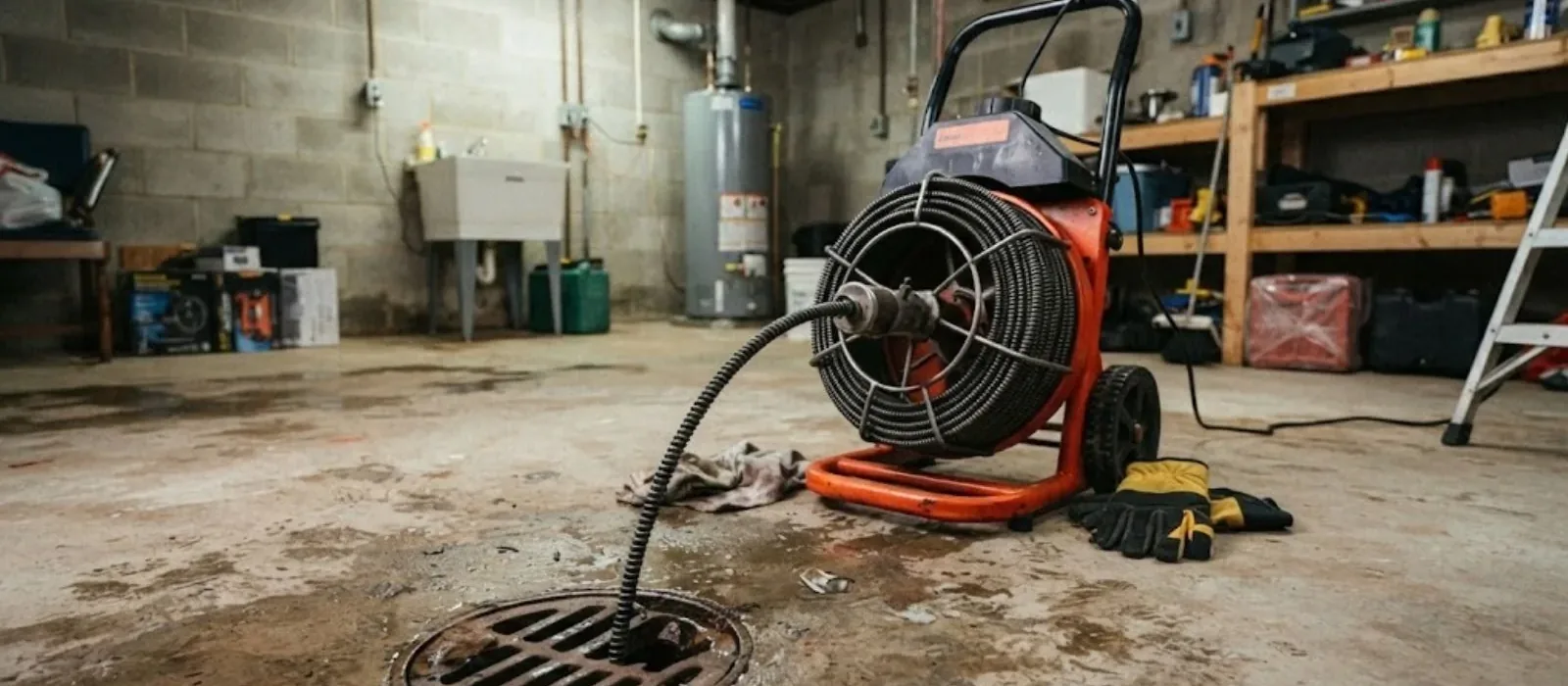
A drain cable goes in through the trap or the nearest cleanout. Clean access saves time, so know where your cleanout is.
Cut and pull the blockage
A cutting head spins through grease, hair or root hairs and drags debris back out instead of pushing it deeper.
Flush and test every fixture
Hot water runs until all drains move freely. The plumber checks traps and joints for leaks while the line is full.
Camera if it comes back
A small camera on a flexible cable shows whether a sag, crack or root mass is feeding the clog.
| What you see | Likely cause | Usual fix | Go further if |
|---|---|---|---|
| One sink slow, the rest fine | Grease or hair in a branch line | Hand auger or drain cable | It returns within weeks, ask about hydro jetting |
| Tub and toilet gurgle together | Clog in the house main | Larger cable through the cleanout | Roots or a sag show on camera, see sewer line cleaning |
| Floor drain bubbles after laundry | Restriction in the main line | Cable the main, then camera | Water reaches the basement floor |
| Drain clears but a stain appears below | Leak in the drain line | Locate the leak, replace the section | A wall or ceiling stays damp |
Drain still backing up?
Dispatch answers at any hour and books a same-day visit when a crew is free. Tell them which fixtures are slow so the right cable goes on the truck.
Clogged at midnight: what can wait and what cannot
The 24/7 line takes drain calls on nights, weekends and holidays. Not every clog needs a night visit, and an honest answer saves you money. A slow bathroom sink can usually wait for a weekday, while sewage in a tub cannot.
Reasonable to wait for daytime
- One bathroom sink draining slowly
- A kitchen sink that clears with a plunger and stays clear
- A tub that drains slowly but does not rise
- No smell, no gurgling in other fixtures
Call the after-hours line
- Wastewater coming up in a tub, shower or floor drain
- Several fixtures backing up at once
- Water rising toward the rim and not falling
- Sewage smell with a wet floor
Tubs, showers and the drain line that leaks
Tub and shower clogs
Hair and soap form a mat just below the strainer. Lift it out with a plastic drain tool first, and call if standing water stays after that.
A leaking drain line
A brown ring on the ceiling under a bathroom, or damp drywall near a tub, can mean a drain leak and not a clog. A leak detection visit finds the joint without opening whole walls.
Floor drains and laundry standpipes
Lint and sediment settle in basement floor drains. A floor drain that backs up during a wash cycle is a main line warning.
What decides the price of a drain cleaning visit
The price follows the job, not a flat rate, so these are the questions the plumber answers first.