
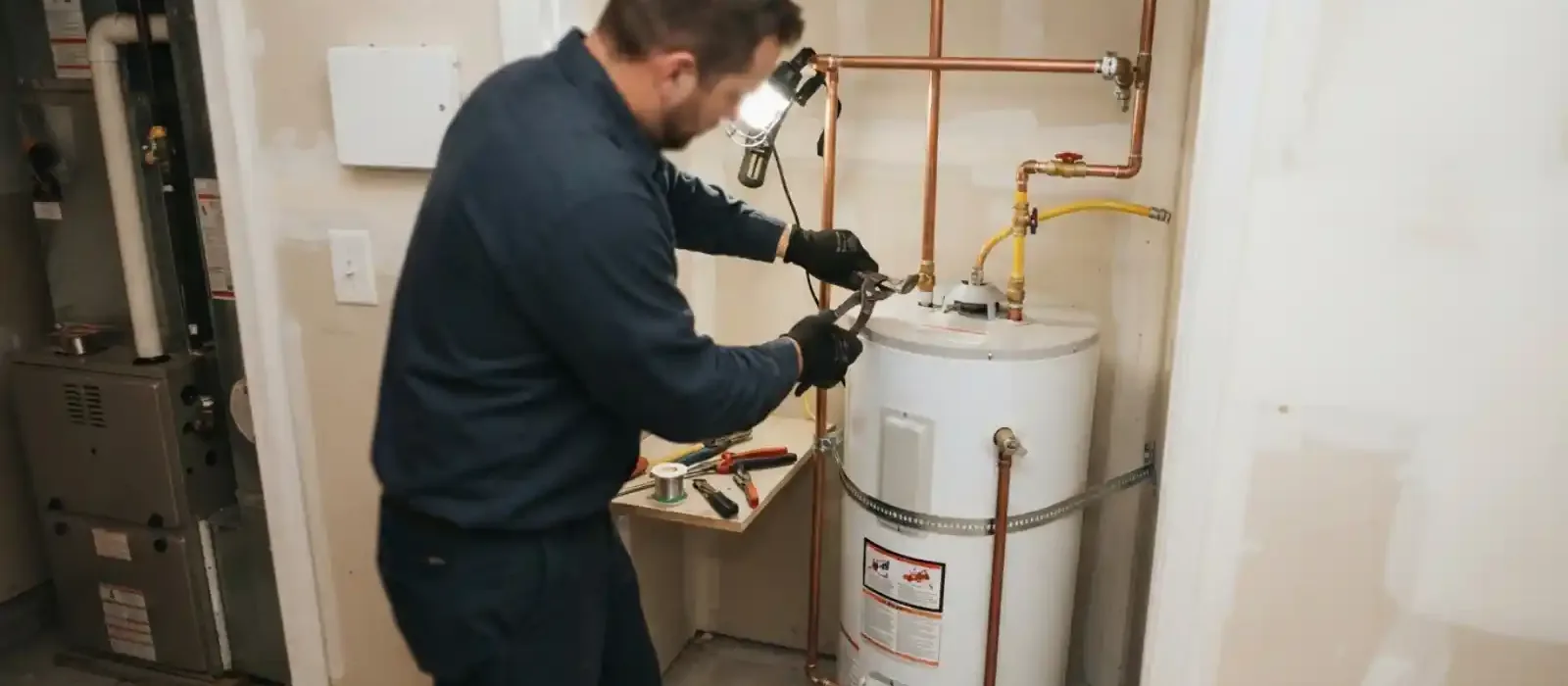
Sizing a heater to the people in your house
A tank that is too small runs out mid-shower, and one that is too large wastes energy keeping idle water hot. The label to watch is the first-hour rating, which is how many gallons the unit can deliver in its first hour, not just the tank volume.
We start with how many people live in the house, how many bathrooms you run at once, and whether a soaking tub or a dishwasher sits on the same line.
| Household pattern | What we look at | Typical direction |
|---|---|---|
| One or two people, one bath | Small first-hour rating, short pipe runs | A compact tank or a small hybrid |
| Family with two baths | Overlapping showers, laundry, dishwasher | A mid-size tank with a strong recovery rate |
| Large family or a soaking tub | Peak demand, long distances to fixtures | A larger tank, or review a tankless unit |
| Rental unit or small office | Steady use during certain hours | Match recovery rate to the busiest hour |
Fuel choices in a town of oil, gas and electric
Fuel oil
Census estimates put 40.6 percent of Farmington households on fuel oil. Where a boiler already runs, an oil-fired or boiler-fed water heater can share the fuel and the chimney.
Utility gas
About 36.2 percent of households use utility gas. Gas heaters recover quickly and need a proper flue, combustion air and a code-minded gas connection.
Electricity
About 15.3 percent use electricity. Electric tanks are simple to vent but need the right breaker and wire gauge for their elements.
Hybrid heat pump
A hybrid pulls heat from the surrounding air, so it wants a roomy space and a drain for condensate. It is a useful upgrade for homes moving off oil.
Plumbing work that goes with the heater
A new heater is a good moment to fix what surrounds it. Old gate valves, brittle flex connectors and corroded unions are cheap to change now and a mess to change later.
Farmington's housing is split almost evenly between homes built before 1980 and homes built since. If we see galvanized pipe or heavy scale at the connections, we will say so and point you to repiping as a separate planned job.
An expansion tank and a drain pan are worth asking about
On a closed water system, heated water has nowhere to go and pressure rises. An expansion tank absorbs that swing, and a drain pan with a line to a safe spot limits damage from a future leak. Ask us whether your setup calls for both.
How a planned installation runs
Walk-through
We look at the old unit, the vent path, the gas or electric supply and the route out of the house.
Choose and price
You pick a unit, and the price is stated before any work starts.
Permit check
Permit rules vary, so we point you to the Farmington building department, which handles plumbing inspections.
Install and test
Old tank out, new unit in, with pressure and leak tests, flue checks and a relief valve discharge pipe set 6 inches or less above the floor or drain as Connecticut's amended code requires.
Walk-around
We show you the shutoffs, the thermostat setting and where the anode rod sits for later checks.
Code and permits for a planned install
Connecticut's 2022 State Building Code adopts the 2021 International Plumbing Code (IPC), and the state also puts boilers and water heaters under Chapter 540 regulations. Permit rules vary by town, so ask the Farmington Building Department at 860-675-2315 before you schedule. A licensed plumber can tell you what the inspector will look for.
Ready to plan your install?
Call and describe the house. We will book a visit and give you a clear price before work starts.
Licenses and permits, plainly
Check who you are hiring
Connecticut plumbing licenses come from the Department of Consumer Protection. A P-1 is the unlimited plumbing contractor license, and a P-2 is the unlimited journeyperson license that works only under a licensed contractor. You can check any plumber's license on the state's eLicense lookup.
Connecticut's code says an owner or agent replacing or altering a regulated plumbing system must first apply to the building official for a permit. Because rules vary, ask the town before the job, and keep the paperwork when you sell. If you live in Avon, the same steps apply, but check with your own town.
What shapes an installation quote
No two houses are alike. These are the pieces that move the number.