
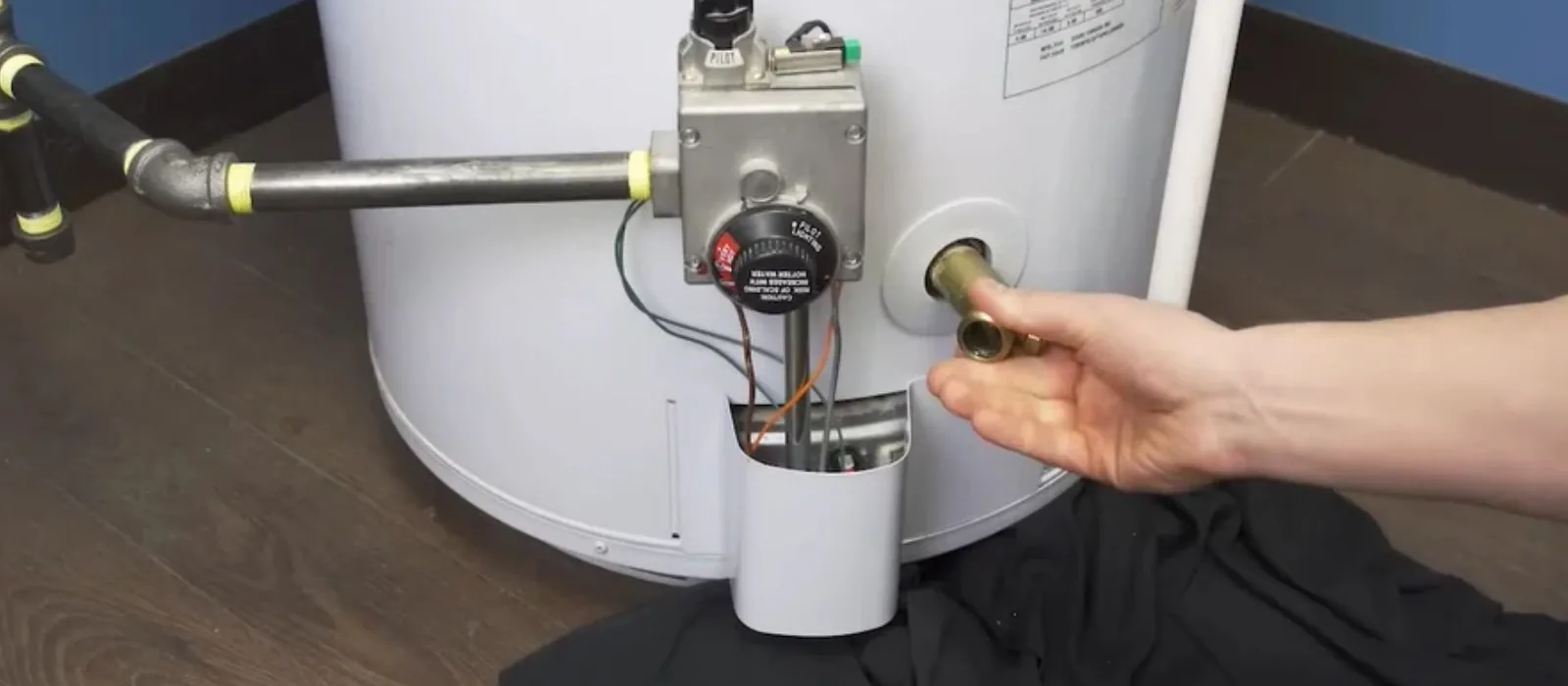
When a leaking or dead water heater cannot wait
A tank that drips from the bottom seam is usually finished, and a tank that leaks at a fitting may be fixable. Either way, standing water near a gas burner or a 240 volt element is a hazard, so treat it as urgent until someone has looked at it.
No hot water in January is its own kind of urgent. Our dispatchers take these calls at night and on weekends, and after-hours visits are booked the same way daytime ones are.
While you wait for the plumber
Do these in order, and stop if any step is unsafe.
- Cut the power. Switch off the breaker for an electric unit, or turn the gas control to pilot or off for a gas unit.
- Close the cold supply. The shutoff sits on the pipe feeding the top of the tank. Turn it clockwise until it stops.
- Keep clear of wet electrical. Do not stand in water to reach a panel. Call us and describe where the water is.
- Smell gas or see soot? Leave the building and call the gas utility or 911 before you call a plumber.
- Contain the water. Mop up, set a bucket, and photograph the tank and the label for your insurance file.
What tends to fail on each type of tank
Gas tank
A dirty flame sensor, a worn thermocouple or a weak gas control valve shuts the burner down. A blocked flue is a safety issue, and we test draft before we leave.
Electric tank
A burned upper or lower heating element, or a tripped high-limit switch, gives you lukewarm or no hot water. A multimeter reading on each element finds the culprit in minutes.
Oil-fired tank
Nozzle clogs and flame faults stop an oil burner. Some oil-heated homes make hot water from the boiler instead, which is a boiler repair job.
Hybrid heat pump tank
Condensate drain clogs, fan faults and sensor errors are the usual calls. The electric elements back up the heat pump, so one failure may hide behind another.
No hot water: how a plumber narrows it down
Check power or fuel
We confirm the breaker, the gas supply and the pilot or igniter before touching anything inside the tank.
Test the controls
Thermostats, limit switches and gas valves are tested with a meter, not guessed at.
Look at the tank itself
Rust at the base, wet insulation or a hissing sound tells us whether the steel is breached.
Flush the sediment if it helps
Rumbling means scale or sediment on the bottom. A drain-and-flush often cures it on a younger tank.
Report the options
You get the cause, a repair price and a replace price, so the choice is yours.
What Farmington homes mean for your water heater
That age mix means many homes have had their original tank replaced at least once. Heating fuel is mixed: about 40.6 percent of households use fuel oil, 36.2 percent utility gas and 15.3 percent electricity. Tell dispatch which one you have, because the parts and the safety checks differ, and the same goes if you call from Newington or another nearby town.
Water comes from more than one utility in town, including Connecticut Water's Unionville system and the Chimney Hill system. We cannot tell you how hard your water is from here, so test your tap or ask your utility for its annual water quality report, since mineral scale is what shortens a tank's life.
What the plumbing code says about relief valves
Connecticut's 2022 State Building Code adopts the 2021 International Plumbing Code (IPC). Connecticut's amendment to IPC section 504.6 says a relief-valve discharge pipe ends no more than 6 inches and no less than two pipe diameters above the floor or the flood-level rim of the waste receptor, cut at a 45 degree angle. A plumber checks that discharge line on every repair visit.
Water heater down right now?
Call the 24/7 line, tell dispatch what you see, and ask for a same-day appointment.
Fix it or swap it: a decision table
| What you see | Usually repair | Usually replace |
|---|---|---|
| Water at the bottom of the tank | Never, the steel has failed | Yes, see water heater replacement |
| Leak at a pipe fitting or valve | Yes, if the tank is dry | Only if the tank is also corroded |
| No heat, tank sound and dry | Yes: element, thermostat or gas valve | If several parts fail together |
| Rumbling or popping | Flush and test | If the tank is old and scaled solid |
| Household has outgrown the tank | Repair will not add capacity | Consider a tankless unit |
Connecticut's plumbing code amendments say a relief valve discharge pipe must end no more than 6 inches and no less than two pipe diameters above the floor or the drain receptor, cut at 45 degrees. We check that on every visit, along with the tank's age and rating label.
What shapes the price of a water heater repair
Two repairs that sound alike can cost very different amounts. These are the things that move the number.