
What counts as plumbing installation
Fixtures and appliances
Sinks, toilets, tubs, showers, dishwashers, washing machine hookups and garbage disposals.
Bathroom and kitchen remodels
Rough-in plumbing moves, new supply and drain lines and final fixture connections.
Additions and basements
New bathrooms, laundry rooms and wet bars tied into existing supply and drains.
New construction
Full rough-in, service connections and finish plumbing coordinated with other trades.
Equipment upgrades
Water heaters, sump and ejector pumps, filtration and whole-house shutoffs.
Repair work fixes something that has broken. Installation builds something new, and that means plans, permits, inspections and a longer view of how the house will be used. Both are done by the same licensed plumbers, but they are planned differently.
Farmington's housing and what it means for a project
The Census Bureau's 2020 to 2024 estimates put Farmington's median home at 1980, with 11,837 housing units, about a quarter of them from before 1960. A remodel in an older house often uncovers older supply and drain lines, so a plumber may recommend replacing sections while the wall is open. In a newer house, the question is usually capacity: can the existing lines support another bathroom?
Heating fuel matters for equipment. About 41 percent of occupied units use fuel oil, 36 percent utility gas and 15 percent electricity, according to the same estimates, so a new water heater or boiler is chosen around what is already in the house. See water heater installation for sizing and fuel.
Rules to know before you build
What the state sets
- Connecticut's current code is the 2022 State Building Code, adopting the 2021 International Plumbing Code
- An owner or agent who alters or installs a regulated plumbing system must first apply to the building official
- Plumbing work requires a state license, and you can check any plumber on eLicense
What the town handles
- Farmington's Building Department handles applications online, and inspections cover plumbing among other trades
- Permit rules vary by job, so ask the building department what yours needs
- Sewer connections have their own rules, covered in Town Code Chapter 156
Chapter 156 requires a permit to connect from the Town Engineer, one separate building sewer per building and a valid Connecticut drainlayer license for the installer. The trench must not be backfilled until the Town Engineer inspects, with 24 hours' notice. Stormwater and foundation drains may not connect to the sanitary sewer. The text on ecode360 may predate amendments, so confirm with the town.
Backflow protection and irrigation
Connecticut's Public Health Code requires an air gap between potable water lines and equipment that could be contaminated. It also requires owners to buy, install and maintain required devices, and calls for annual testing of devices such as reduced-pressure principle and double-check assemblies under the water system's program. Ask your utility how it schedules testing.
A vacuum breaker or air gap is required for lawn sprinkler systems that add no chemicals, and for flush-valve toilets. Connecticut also adds a rain sensor requirement for sprinkler systems to the building code. Sprinkler installers hold their own state license class.
Water heater discharge pipes
A detail inspectors look at.
- Height. The discharge pipe ends not more than 6 inches and not less than two pipe diameters above the floor or flood level rim of the waste receptor.
- Cut. The end is cut at 45 degrees.
- Boilers and heaters. They also fall under separate state regulations adopted under chapter 540.
Planning a project?
Tell dispatch what you want to add, and the 24/7 line can set up a visit to look at the space and price the work.
From rough-in to final: the order of work
Plan and permit
The plumber measures, decides on pipe routes and fixtures and files or advises on the application.
Rough-in
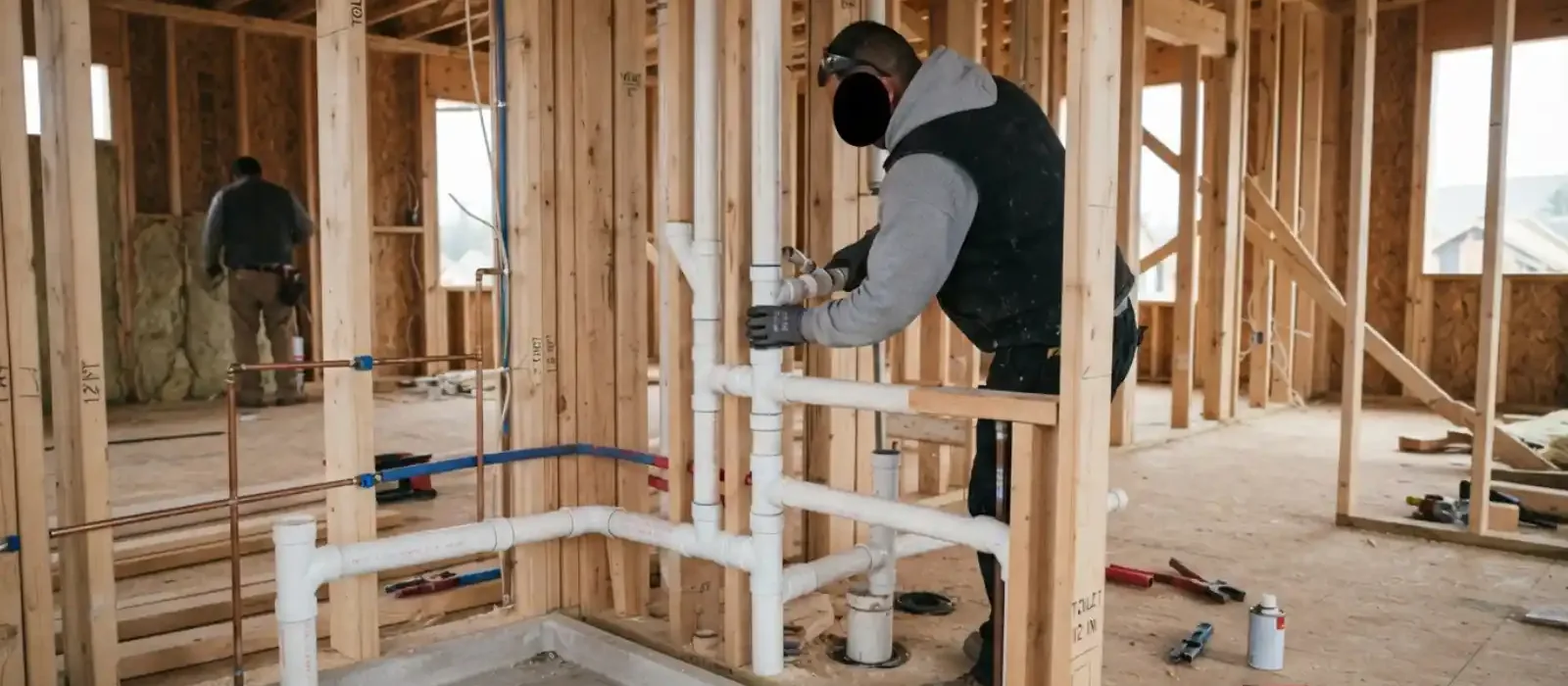
Drain, vent and supply lines are placed in open framing. This is when inspections often happen.
Pressure and drain tests
Lines are checked for leaks before walls close.
Finish plumbing
Fixtures, valves and appliances are connected after drywall, tile and cabinets.
Final inspection and walkthrough
The job is inspected where required, and you learn where each shutoff is.
New construction and commercial fit-outs
A new house needs a water service connection, a sewer connection and the full interior system, all in sequence. Call 811 before digging, which is free and required at least two full business days before mechanized digging.
Businesses have their own needs. Farmington's public works permits page even lists WestFarms mall tenant fitouts, a reminder that retail and office spaces carry plumbing permits too. Our commercial plumbing page covers those jobs.
A note on gas piping
If you smell gas, leave first
About 36 percent of Farmington households heat with utility gas and 6 percent with bottled or tank gas. If you ever smell gas, leave the building and call the gas utility or 911 before calling a plumber. Gas line work should only be done by a licensed professional with the right permits.
What decides the price of an installation
Cost factors
Two bathrooms that look alike can price very differently, because the work behind the wall is not alike.