
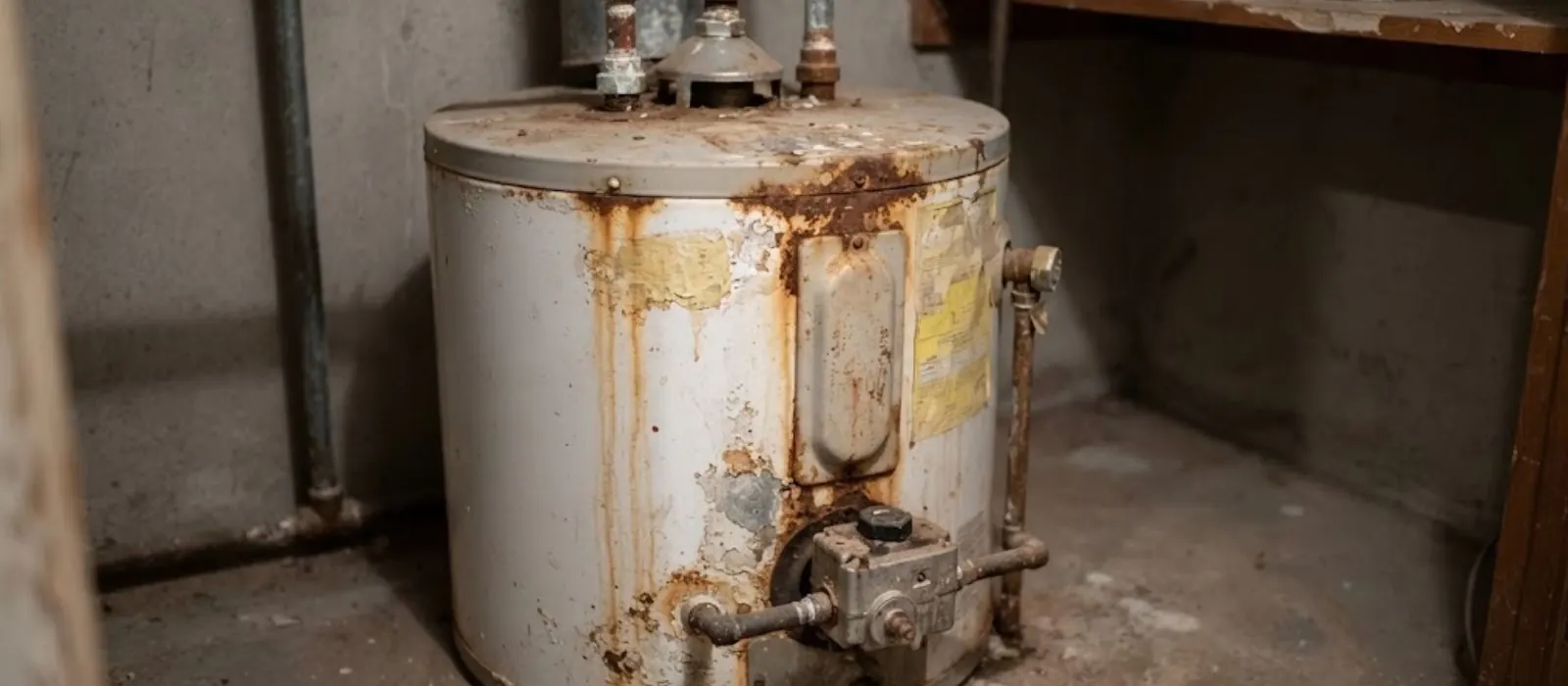
A failed tank in the first ten minutes
Stop the water
Turn the cold supply valve above the tank clockwise. If it will not budge, close the main valve at the meter or where the line enters the house.
Kill the heat source
Flip the breaker for an electric tank. For gas, turn the control to off. Smell gas? Leave and call the gas utility or 911 first.
Drain the surface water
A wet vac and a few towels keep the damage from reaching drywall and stored boxes. Move anything valuable up off the floor. Crews also cover West Hartford across the line.
Photograph the scene
Take shots of the tank, the rating label and the puddle. Insurers like dated pictures.
Call the 24/7 line
Tell dispatch your fuel type, the tank size on the label and where the unit sits. That lets us plan the right replacement.
Why a leaking tank means replacement, not repair
A steel tank is lined with glass and protected by a sacrificial anode rod. When the rod is spent and the lining cracks, water reaches bare steel and rust eats through, usually at the bottom seam. No weld or sealant holds against that pressure.
If your tank is dry and the problem is a bad part, a water heater repair may be the cheaper answer. We check which one you have before quoting a swap.
Night and weekend failures are common
Tanks often fail when they cycle on after a cold night or a holiday weekend, when no one is home to notice. Our after-hours crew is dispatched through the same line used on weekdays, and same-day replacement is offered when a unit and a crew are available.
Picking the new unit
Standard tank, like for like
- Fits the existing pipes and vent most of the time
- Quicker to install, so hot water returns sooner
- Gas, oil, electric and hybrid versions all exist
- Tank size is set by your family size and peak use
Tankless or hybrid upgrade
- Frees floor space and delivers hot water on demand
- May need a bigger gas line, new venting or new wiring
- Hybrid heat pump units want room and a condensate drain
- See tankless water heaters for the full trade-offs
Farmington's fuels and what they mean for the swap
The Census Bureau's 2020 to 2024 estimates show 40.6 percent of Farmington households heat with fuel oil, 36.2 percent with utility gas, 15.3 percent with electricity and 6.0 percent with bottled gas. That spread means we swap all four kinds of heater in this town, and each has its own venting and fuel checks.
Connecticut's amended plumbing code requires the relief valve discharge pipe to end no more than 6 inches and no less than two pipe diameters above the floor or drain, cut at 45 degrees. Connecticut also states that boilers and water heaters are governed by regulations adopted under chapter 540 of the General Statutes.
| Fuel | What we check | Extra work that can come up |
|---|---|---|
| Utility gas | Gas line, shutoff, flue draft, combustion air | Flue liner or vent repair |
| Fuel oil | Burner, nozzle, chimney or vent path | Tank or line cleaning, vent changes |
| Electric | Breaker size, wire gauge, element wiring | Circuit upgrade for a larger unit |
| Bottled gas | Regulator, line sizing, tank location | New fittings for a higher-output unit |
Tank dead or flooding?
Call now, say what fuel you burn and book the earliest slot. Dispatch answers 24/7.
Getting the basement ready for the new tank
Before the crew arrives
Clear a path
Move boxes and furniture so the crew can carry a 40 to 50 gallon tank without squeezing past obstacles.
Note the vent and the age
Write down the fuel, the tank gallons and the manufacture date on the label.
Know your shutoffs
Show the crew where the main valve is, and tell them if any valve sticks.
Check the nearest drain
A floor drain or sump for flush water and discharge makes the work cleaner.
Basement units in older Farmington houses sometimes sit near a floor drain or sump. If groundwater is a concern at your address, see sump pump service and ask dispatch about it, especially if your home is in Unionville or River Glen.
What moves the price of a replacement
Replacement quotes vary because the old tank and the house vary. These are the factors we weigh.