
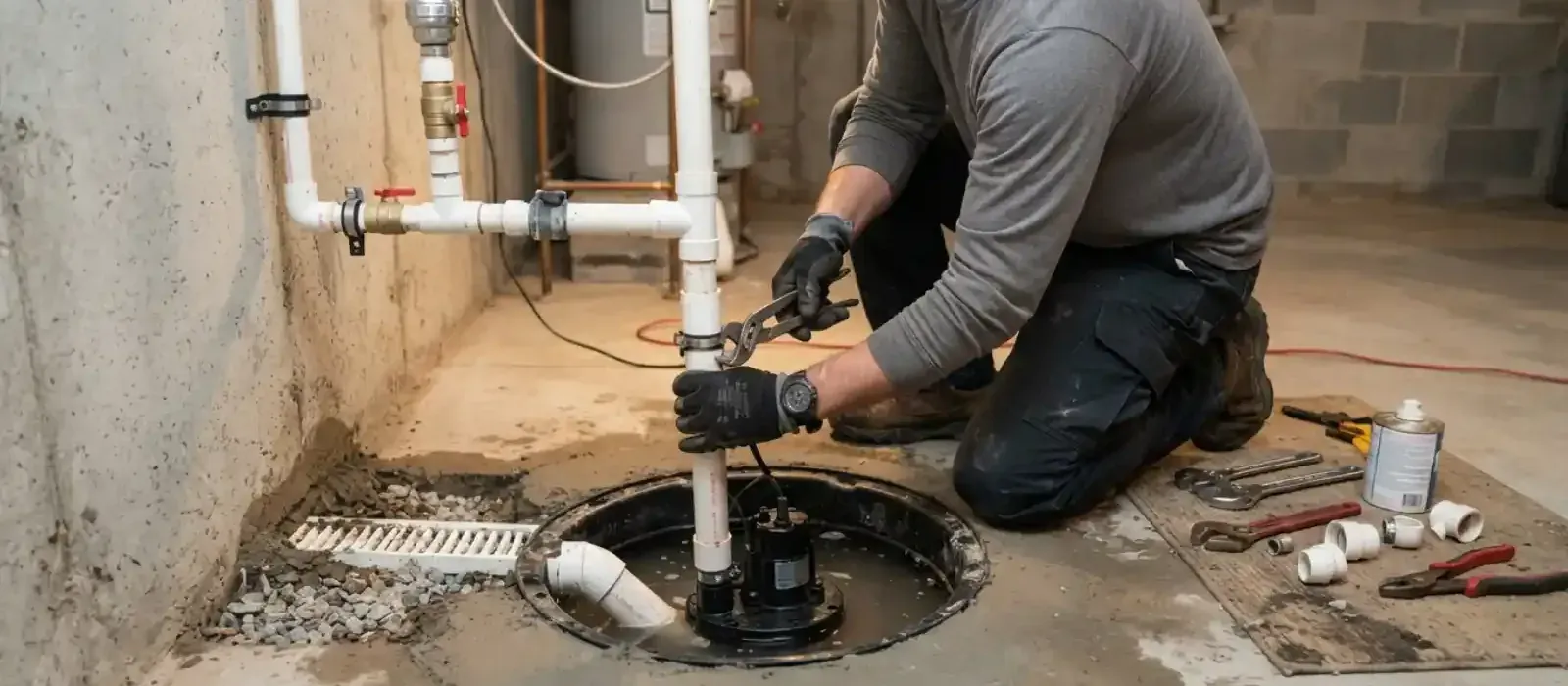
What is DIY and what is not
| Task | DIY? | Why |
|---|---|---|
| Replace a pump in an existing pit | Usually yes | It is mostly unplugging, a union and a check valve. |
| Clean the pit and test the float | Yes | Debris under a float is a common cause of failure. |
| Add or move an outlet | No, use a licensed electrician | Wet locations need correct protection and wiring. |
| Break the floor and set a new pit | Pro or experienced only | Concrete work, dust, drain tile and a discharge plan. |
| Tie the discharge into other piping | Ask first | Local rules limit where water can go. |
| Install a battery backup system | Often yes, if the pit is sized | Needs room beside the main pump and a charger outlet. |
Be honest about your comfort level. A pump swap takes careful hands, not special tools. A new pit or a wiring change is a bigger step, and the cost of a mistake is a flooded basement or a shock hazard.
Electrical safety before you touch anything
Safety rules for any sump work
Water and electricity share this space. Treat every step as live until you have proven otherwise.
- Unplug first: pull the pump plug at the outlet before you reach into the pit, and stand on something dry.
- No extension cords: a cord on a wet floor is a hazard. If the outlet is too far, call an electrician to move it.
- GFCI protection: the outlet for a pump in a damp basement should be on a ground-fault circuit, installed by a licensed electrician.
- Dedicated circuit: avoid sharing the pump circuit with a freezer, washer or heater that could trip the breaker.
- Never bypass a trip: a pump that keeps tripping the breaker has a fault, so stop and get it checked.
Replace a pump in an existing pit
Cut power and photograph
Unplug the pump and take a picture of the pipes, the check valve and the float position. You will want it when you reassemble.
Disconnect the discharge
Loosen the union or coupling above the pump. Expect a little water to drain back. The check valve keeps water from returning, so check that it is facing the right way when you refit it.
Lift out and clean
Lift the old pump by its handle or pipe, not the cord. Scoop out silt and stones from the pit and look at the screen or inlet for debris.
Set the new pump
Place it on a flat, firm base so it sits upright and the float can swing free of the walls and pipes. Match the discharge fitting to the existing pipe.
Reconnect and secure
Fit the check valve and discharge pipe, tighten the union and tie the cord so it cannot snag the float.
Test with water
Plug in, then pour a bucket or two into the pit. The pump should start, empty the water and shut off. Watch the discharge outside to confirm it flows away from the foundation.
Pump running but the pit never empties?
A licensed plumber can check the pump, check valve and discharge line and explain what is wrong. Call (860) 397-8103 for a clear price before work starts, with same-day appointments when available.
Battery backup: protection for the power outage
Storms that fill a pit often knock out the power. The National Weather Service reported that Irene left up to 3 million residents without power for as long as a week, mainly in Connecticut and Long Island. A pump on household current is useless in that situation.
A battery backup pump sits beside the main pump with its own float and a charged battery. Test it before storm season and replace the battery on the maker's schedule. This is a maintenance tip, not a code requirement.
Main pump only
- Lower setup cost
- Stops during outages
- Fine if the pit seldom fills
- A single failure leaves the basement exposed
Main pump plus battery backup
- Keeps working when power fails
- Needs room in the pit and a charger outlet
- Battery needs testing and replacement
- Better where water comes in often
Where the pump water may and may not go
The discharge is the part most DIY guides gloss over. A pump that moves water ten feet and drops it next to the foundation just recirculates it into the pit. A line that ties into a sanitary sewer can overload it, and the town codes for Farmington and Plainville forbid it.
Beyond that, ask the building department or town engineer before you glue a single pipe, because discharge rules differ by town.
Sump discharge and the sanitary sewer in Farmington
Farmington's Town Code, Chapter 156, says stormwater, roof drains and foundation drains may not connect to the sanitary sewer. For a sump pump, that means your discharge line cannot tie into the house sewer line. Ask the Town Engineer to confirm the current wording, because the posted text may predate amendments.
Digging a trench for a longer discharge line also brings the call-before-you-dig rule. Call 811 or CBYD.com at least two full business days before mechanized digging, and plan around that wait.
Source type: municipal code and state call-before-you-dig guidance
Flood ground in Farmington
Farmington's hazard mitigation plan says Meadow Road floods every year, lists a repetitive-loss culvert on Dorset Lane and notes that the bank by a Garden Street cemetery floods near a 21-inch sewer line. The Unionville Museum records the 1955 flood, which hit River Glen hardest.
A sump handles groundwater under the slab. It does not stop river overflow. If you live near those brooks, consider a backup pump and talk with a plumber about basement waterproofing, because a pump alone has limits.
Parts that matter when you shop
Submersible or pedestal
Submersible pumps sit in the pit and run quietly. Pedestal pumps keep the motor above water and are easier to reach but louder.
Float switch
A vertical float needs less room than a tethered one. Make sure nothing in the pit can snag it.
Check valve
It stops water from falling back into the pit each cycle. Without one the pump short-cycles.
Discharge pipe
Match the pipe size to the pump outlet and keep bends gentle so water moves freely.
When to bring in a licensed plumber
Call a pro if the pit is cracked, the pump runs constantly, water enters at several spots or you need a new pit. Our sump pump page covers repair and replacement, and we can also handle a backup system for homes where outages are a worry.
Nearby towns show how local rules vary. In Plainville, the town ordinance bars foundation drains and groundwater from the sanitary sewer, and the Pequabuck River flooded homes there during Irene. In West Hartford, the town warned residents in January 2024 to check their sump pumps before a rain-on-snow storm, and MDC runs a Backwater Valve Program, so ask MDC if you qualify.