
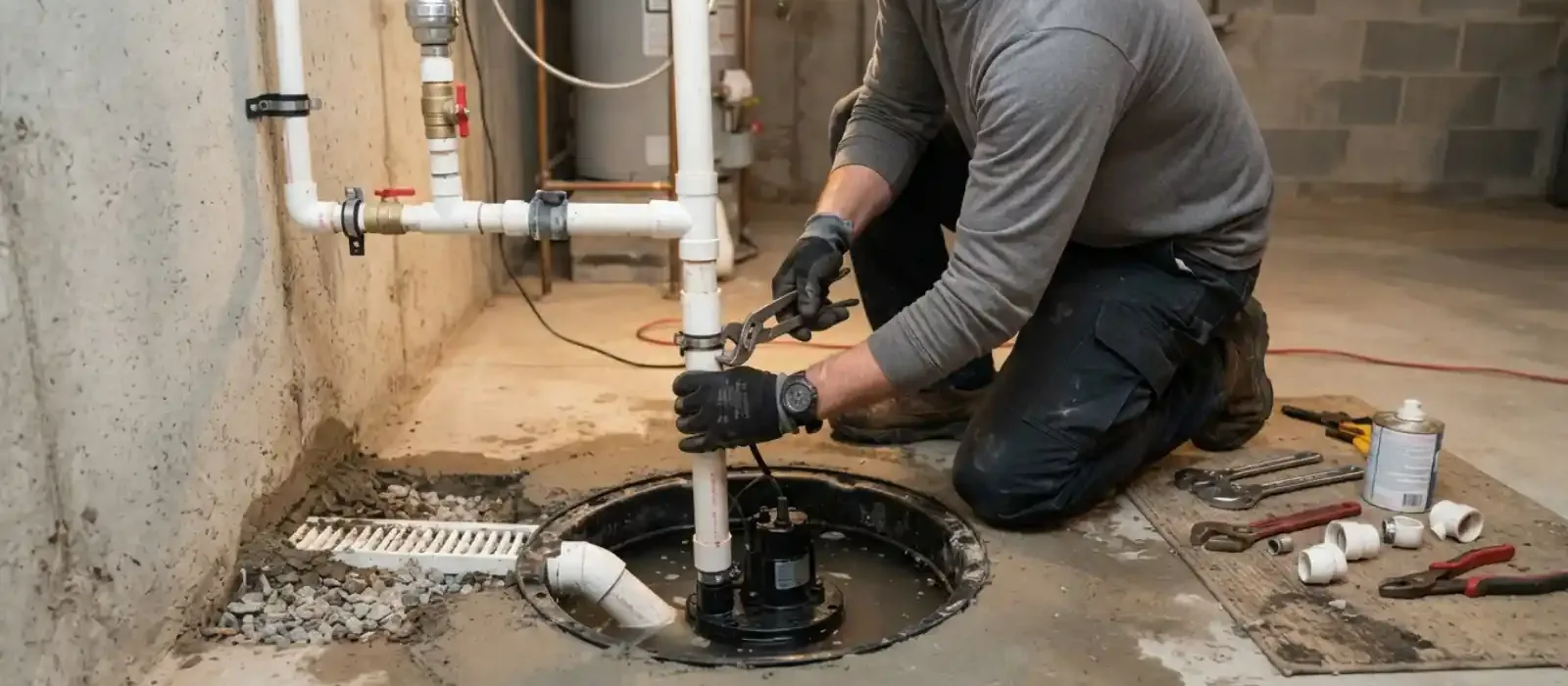
Basement taking on water and the pump is silent
Before the plumber arrives
Mind the electricity
If water is touching outlets or the panel, do not wade in. Cut power at the main breaker only if you can reach it from a dry spot, and otherwise call for help.
Check the pit
Lift the lid with dry hands. If the pump is out of water, the float may be stuck, the cord unplugged or the breaker tripped.
Lift what you can
Move boxes, electronics and stored items up onto shelves or tables. Water damage grows quickly on cardboard and carpet.
Photograph the water
Take pictures of the water line on the walls and the pit for your insurer. Then call. Dispatch runs 24/7 and offers same-day visits when a crew is free.
Describe it the way you see it: symptoms and what they mean
Pump runs nonstop
A stuck float, a failed check valve or a pit overwhelmed by groundwater keeps a pump cycling. Hot, burning smells mean the motor is overworking.
Pump never turns on
A tripped GFCI, a dead switch or a float lodged against the pit wall is the usual cause. Pouring a bucket of water into the pit tests the switch.
Water in the basement but the pit is empty
Groundwater is finding another path. The pit may be too shallow or the drain tile blocked. This one needs a plumber's eyes.
Loud banging after each cycle
Water falling back down the discharge pipe slams the check valve. A faulty or missing valve is the cause.
Pump runs but pumps little
A clogged intake screen, a cracked impeller or an ice-blocked discharge line cuts output.
Why Farmington basements flood
Rivers, brooks and the record behind them
Farmington sits on the Farmington and Pequabuck Rivers, with Great, Hyde and Scott Swamp Brooks adding to the drainage network. The town's hazard mitigation plan notes that parts of town lie in FEMA-mapped floodplains and that Meadow Road floods every year. It also records repetitive flooding at Dorset Lane and near the cemetery bank on Garden Street.
The August 1955 flood is the benchmark local history. The Unionville Museum describes River Glen as the worst-hit part of Unionville, with homes lost and damaged. If your basement is near the river or a brook, a working sump pump is not a luxury.
Not every wet basement is a flood. Heavy rain raises the water table, and older foundations seep through floors and walls. If your pump runs often and the basement stays damp anyway, see basement waterproofing for drainage fixes that work with the pump.
What to do when the sump pit is filling and the pump is not running
- Do not reach into the pit until the pump is unplugged.
- Check the outlet and breaker and press the GFCI reset if the pump is on one.
- Lift the float by hand only after unplugging, to see whether it sticks.
- Bail or use a wet vac to slow the rise while you wait, and keep cords out of the water.
- Call the 24/7 line so a plumber can replace the pump or add a backup.
Storm coming and the pump is questionable?
Call the 24/7 line. Dispatch books same-day tests and replacements when a crew is free and gives you a clear price before work starts.
Test the pump yourself in five minutes
Look at the pit
Remove the lid and check for debris, gravel or a pump that has tilted off its base. Make sure the float can move freely.
Pour in water
Slowly add a bucket or two. The float should rise, the pump should start and the water should drop quickly.
Watch the discharge
Outside, the discharge line should push water away from the foundation. A frozen or kinked line sends water back to the pit.
Listen for trouble
Grinding, rattling and a motor that runs without lowering the water mean the pump is wearing out.
If the pump fails the test, a plumber replaces it rather than patching. A pump older than a decade is a candidate for replacement even if it still runs, since failure usually arrives during the next big storm. See also water line repair if water is entering from a buried line instead of the ground.
Primary pump, battery backup or water-powered unit
| Option | Works in a power outage? | Best for | Trade-off |
|---|---|---|---|
| Primary submersible pump | No | Everyday groundwater | Dies with the power, which often goes out during storms |
| Battery backup pump | Yes, for hours | Homes with outage risk and finished basements | Battery needs testing and replacing on a schedule |
| Water-powered backup | Yes, while water pressure holds | Homes on municipal supply with no battery space | Uses household water and depends on supply pressure |
| Sewage ejector pit | No | Basement bathrooms below the sewer line | A different system from a sump, with different pumps |
Insurance, flood coverage and what to ask your agent
Know what your policy covers
The Connecticut Insurance Department says standard homeowners policies do not cover flood damage, and sewer backup is typically not part of standard flood insurance. Most flood policies carry a 30-day waiting period, so a new policy will not help with a storm next week.
Water that comes from inside the house, such as a burst pipe, is generally handled under homeowners insurance. Ask your agent specifically about sump pump failure and water backup coverage before the next storm.
What affects the cost of a sump pump job
A switch or float replacement is a short visit. A new pump with a backup and a rebuilt discharge line is a bigger project. The factors below drive the number.
Call (860) 397-8103 for your number, and you will hear a clear price before work starts.