
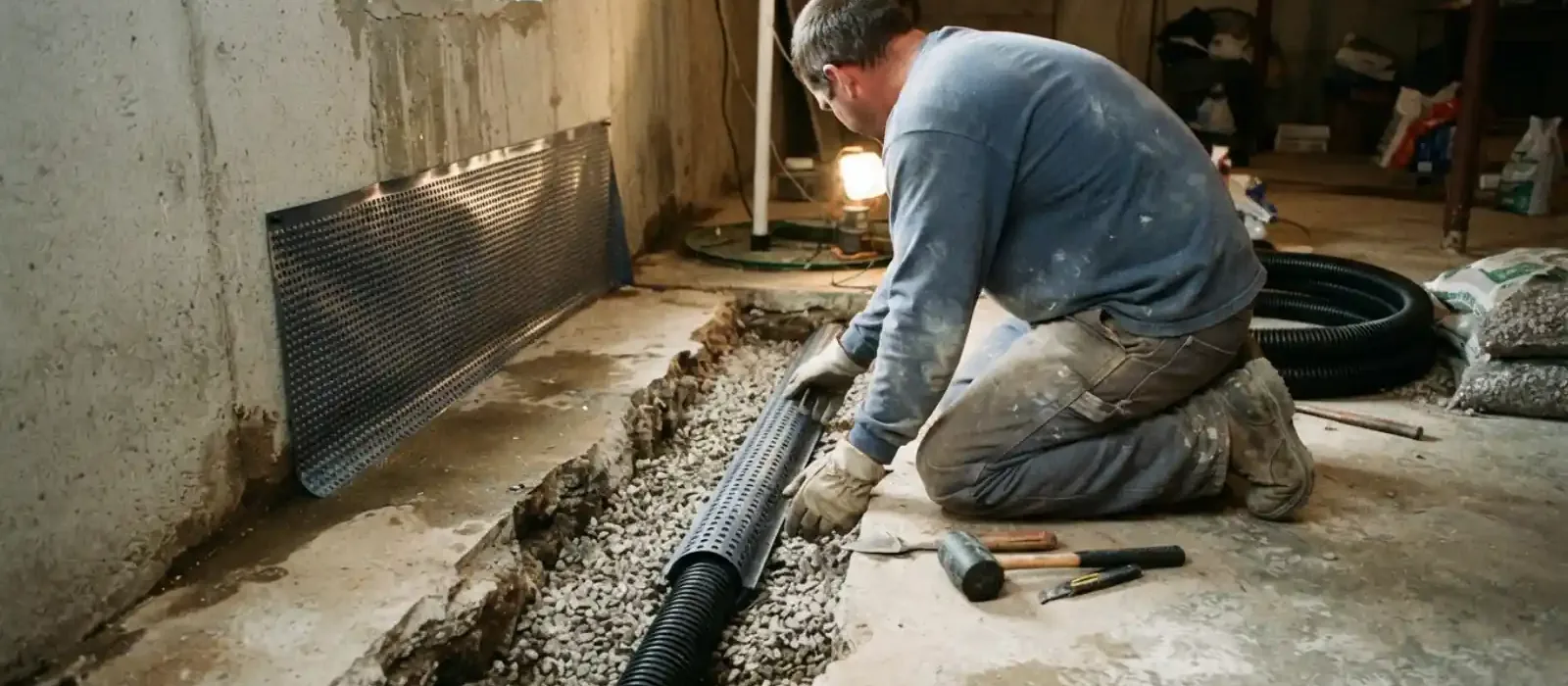
Interior drains or exterior excavation
Interior drainage
- A channel is cut along the inside edge of the floor and fed to a sump pit
- Works from inside, so the yard and landscaping stay intact
- Manages water that has already reached the slab and wall base
- Needs a reliable sump pump with a backup
Exterior waterproofing
- Soil is excavated down the foundation wall and a membrane and drain are installed
- Stops water before it touches the wall
- Disturbs landscaping, driveways and walks
- Often needs separate trades for digging and foundation repair
Interior systems are the usual starting point for finished or crowded basements because they avoid heavy excavation. Exterior work suits a cracked or leaking wall where water pressure is the problem. A plumber can design the drainage and pump side, and a mason or engineer may be needed if the wall itself has moved.
Where water actually gets in
Floor-wall joint
The cove joint where the slab meets the wall is the most common seep point. Water rises under the floor and appears at the edge.
Cracks in the wall
Hairline cracks that weep after rain are one type. Cracks that widen or step across block courses are structural and need an engineer.
Window wells
A blocked or shallow well drains poorly and dumps water against the glass. Extending the well or adding a drain often solves it.
Pipe and wire penetrations
Where a water line, gas line or cable enters the wall, a poor seal lets groundwater squeeze through.
Gutters and downspouts
Roof water dumped beside the foundation soaks the soil. Sometimes the cheapest fix for a wet basement is moving water away from the house.
A high water table
After long rain, water pressure under the slab can push up through the floor. A sump pit lowers that pressure.
Reading Farmington ground: rivers, brooks and floodplain
Why location matters
Farmington is crossed by the Farmington and Pequabuck Rivers, with Great, Hyde and Scott Swamp Brooks feeding the drainage. The town's hazard mitigation plan notes parts of town are in FEMA-mapped floodplains and that Meadow Road floods every year.
River Glen in Unionville was the worst-hit area of the August 1955 flood according to the Unionville Museum. A basement near water is more likely to need a drain and pump system than one on a hilltop lot.
The town's plan also lists repetitive flooding near Dorset Lane and the cemetery bank on Garden Street. If your home sits low on its lot, the soil may hold water for days after a storm. A sump pump is the heart of most interior systems here. Homes just north in Avon face their own mix of soil and slope, so ask for an inspection of your lot specifically.
What to do when water is coming into the basement
- Stay out of standing water if the furnace, panel or outlets are near it. Water and electricity are a deadly mix.
- Shut off power to the basement at the panel only if you can reach it dry.
- Check the sump pump has power, the float moves freely and the discharge line is not frozen or blocked.
- Move belongings up off the floor and photograph the damage for your records.
- Call the 24/7 line if water keeps rising or a pump has failed.
Ready to find where the water enters?
A plumber can inspect the basement, check the sump and gutters and explain options before anything is dug up. You hear a clear price before work starts.
How a waterproofing job runs
Inspect inside and out
A plumber walks the basement with a moisture meter, checks the wall base and notes cracks, stains and efflorescence. Outside, grading, gutters and downspouts are checked.
Fix the easy sources first
Extend downspouts, regrade the soil to slope away and seal obvious penetrations. These steps sometimes solve the problem alone.
Design the drainage
If water still enters, the plumber lays out the drain channel, pit location and pump size, plus where the discharge exits the house.
Install and test
The channel is cut, laid with gravel and a drain pipe, and covered. The pump is tested with water, and the discharge is checked outside.
Exterior digging needs a call to 811 first. Connecticut law requires notice at least two full business days before mechanized digging, so underground utilities can be marked. Permit rules vary, so ask the Farmington building department what your project needs.
Matching the symptom to the fix
| Sign | Likely cause | Typical fix |
|---|---|---|
| Damp floor edge after rain | Cove joint seepage | Interior drain channel and sump |
| White chalky film on walls | Water moving through masonry | Fix source water, then seal or drain |
| Water at a window well | Blocked well or poor grading | Clean, extend or drain the well |
| Standing water, pit empty | Pit too shallow or drain tile blocked | Add or deepen pit, flush tile |
| Stair-step crack in block | Settlement or hydrostatic pressure | Engineer's evaluation, then repair |
| Musty smell, no visible water | Humidity or hidden seepage | Dehumidify, then trace the source |
If a pipe, not the ground, is the source, a leak detection visit with a moisture meter and thermal camera will tell you. Pipe leaks do not stop when the rain does.
What shapes a waterproofing price
No two basements are alike, so a number only makes sense after an inspection. The factors below move the price the most.
Call (860) 397-8103 for your number, and a clear price comes before any work begins.