
The six factors behind every quote
Where the money goes
A written quote should show each factor. If it only shows a total, ask for the breakdown.
Tank or tankless: the cost trade-off
A tank heater stores hot water and reheats it as you use it. A tankless heater warms water only as it flows. The tank is simpler to install and usually costs less up front. The tankless unit takes less floor space and does not run out during a long shower, but it often needs larger gas or electrical capacity and a different vent.
That extra infrastructure is the real cost gap, not the heater itself. Ask any plumber to price the heater and the upgrades separately, so you can see which part of the quote is the unit and which is the work.
Standard tank heater
- Often a direct swap for the same type of unit
- Lower installed cost in most homes
- Holds a fixed supply of hot water
- Takes floor space and loses some heat while idle
- Typical choice for emergency replacements
Tankless heater
- May need a larger gas line or electric service
- Different venting and sometimes a condensate drain
- Delivers hot water on demand
- Needs periodic flushing to remove scale
- Best planned in advance, not decided at midnight
Fuel decides more than people expect
The fuel in your basement shapes what a replacement involves. If you are on utility gas, a new gas heater connects to what you already have. If you have no gas service, your choices narrow toward electric or a heat pump unit, which changes the electrical side of the job.
Switching fuel is possible, but the job grows. A new gas line, a new circuit or a new vent can each turn a simple swap into a project. Decide on fuel early, because it affects which heaters you can consider and what the quote must include.
What Farmington's fuel mix means for a water heater swap
Census Bureau ACS 2020 to 2024 data lists fuel oil or kerosene as the main heating fuel for 40.6 percent of Farmington homes, utility gas for 36.2 percent, electricity for 15.3 percent and bottled or tank gas for 6.0 percent. Those figures are about space heating, not water heaters, but they tell you what a typical Farmington basement has nearby.
If your home heats with oil, ask whether your water heater is fired by the boiler, by gas or by electricity before you shop. A home with no gas service has fewer easy replacement options than one with gas at the meter, and that is where a quote can jump.
Source type: Census Bureau ACS 2020 to 2024
Venting, discharge pipe and code basics
Connecticut's current State Building Code is the 2022 edition, which adopts the 2021 International Plumbing Code. One state amendment covers the relief valve discharge pipe: it should end not more than 6 inches and not less than two pipe diameters above the floor or the flood level rim of the waste receptor, cut at 45 degrees.
You do not need to memorize that. You need to know that a safe installation includes a relief valve and a proper discharge, and that a cheap quote may skip them. Ask the plumber to show you where the discharge pipe ends before you sign off.
Diagnose and confirm replacement
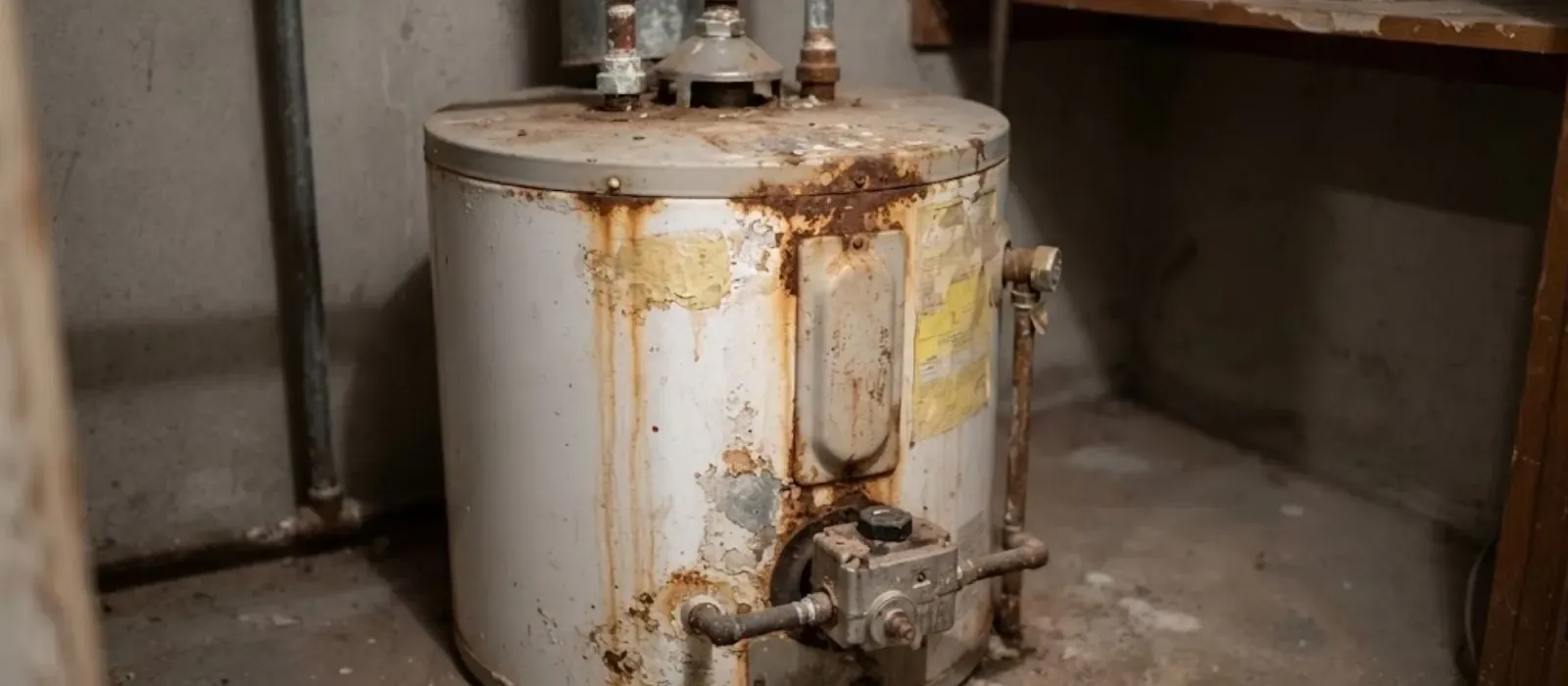
A leaking tank body usually means replacement. A bad element, thermostat or anode may mean a repair, so ask about water heater repair first if the unit is young.
Choose type, fuel and size
Count the bathrooms, the people and the peak-use hours. Your plumber should size the unit to fit, not guess.
Check venting and connections
The plumber inspects the flue, gas line or electrical supply, shutoff valves and drain provisions.
Permit and install
The plumber installs the new unit, connects the relief valve and discharge pipe, and removes the old heater.
Test and explain
Expect a check of temperature, leaks and venting, and a walkthrough of the shutoff valves.
Tank leaking or no hot water?
A failed heater cannot wait for a quote shopping weekend. A licensed plumber can look at the unit, explain the choices and give you a clear price before work starts.
Permits: ask the building department
Connecticut's building code says an owner or agent who intends to replace or alter a plumbing system regulated by the code must first apply to the building official for a permit. Farmington's building department lists plumbing and heating among its inspected work and takes permit applications online.
Permit rules vary, so ask the town building department about your specific job, and ask your plumber who pulls the permit. Do not assume your project is exempt, and verify the plumber's license on the state's eLicense lookup (elicense.ct.gov).
| Item | What to look for | Red flag |
|---|---|---|
| Heater model and size | Named model, capacity and fuel | A vague 'standard unit' |
| Venting | Inspected and priced if changes are needed | Not mentioned for a gas or oil unit |
| Relief valve and discharge | Included and installed to code | Left to the homeowner |
| Old unit removal | Included or priced separately | Not addressed |
| Permit | Plumber explains who handles it | 'You do not need one' without checking |
| License | Plumber's license can be verified | Cannot or will not give it |
Water quality and what it means for your next heater
Minerals in the water affect how long a heater lasts and how often a tankless unit needs flushing. Utility-reported data compiled by TapWaterData lists about 9.5 grains per gallon for the water supplied in Plainville, which that source classes as hard. That is a good reason for a Plainville homeowner to ask about scale protection and maintenance when choosing a heater.
In Newington, MDC's 2025 water quality report lists average calcium of 3.09 ppm and does not give a hardness figure. Wherever you live, test your tap and ask your utility for its annual report before you decide how much scale protection to buy. If you are comparing models, our water heater installation page covers sizing and fuel questions in more detail, and our water heater replacement page covers the emergency swap.