
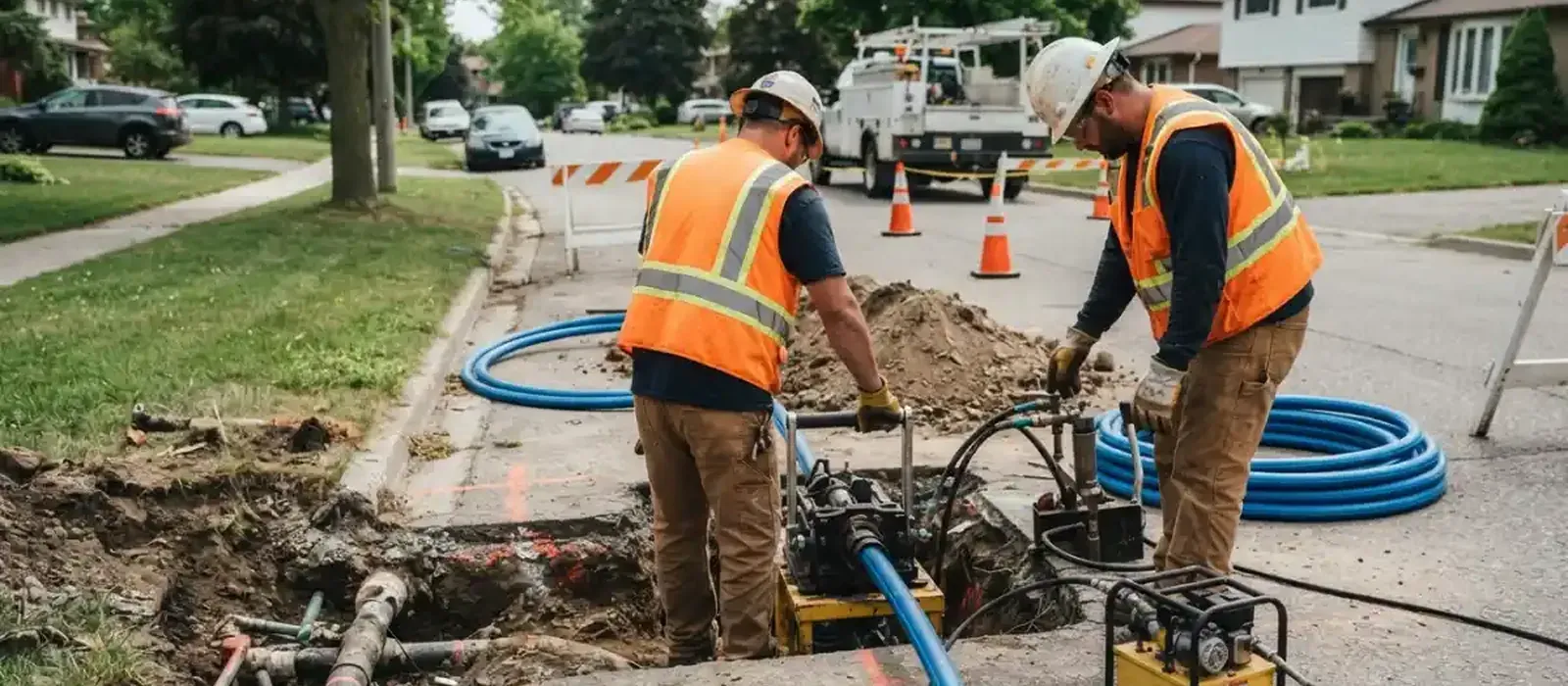
Signs that the leak is outside
A wet spot with no rain
Soft ground that stays wet for days in dry weather often sits on top of a pressurized line, especially along the path between the street and the house.
A green strip or a sunken patch
Constant moisture feeds grass, and washed-out soil can leave a shallow dip above a buried pipe.
Pressure that has dropped
A leak on the supply line steals pressure before the water reaches your fixtures. All taps feel weaker, not just one.
Hissing near the meter or hose bib
On a quiet night, walk to the meter and outdoor spigot and listen. A steady hiss with the house shut off is a clue.
A high bill with no change in habits
Water that runs into the ground never shows up as a puddle, but the meter counts every gallon.
Cracks or wet soil near the foundation
Seeping water at the basement wall can come from a yard leak that travels along the foundation.
Run the meter test first
Turn off everything
Close all faucets, shut off the irrigation controller, stop the dishwasher and washer, and make sure no toilet is running.
Read the meter
Lift the lid on the meter box or find it in the basement. Note the full reading and look at the small low-flow dial.
Wait an hour, read again
If the reading changed or the dial kept turning, water is escaping.
Close the main valve inside the house
Check the meter again. If it still moves, the leak is on the yard side, between the meter and the house. If it stops, the leak is in the house.
That last step separates a buried service line leak from a leaky toilet or an indoor pipe. It also tells you whom to call. Our leak detection page covers how plumbers pinpoint the spot once the meter points outside.
What a wet spot might be instead
| What you see | Possible source | First move |
|---|---|---|
| Wet ground along the path to the house, meter moving | Leaking supply line | Close the main, call a plumber, call 811 before any digging |
| Wet or green patch in one zone, near a sprinkler head | Irrigation line or valve | Turn off the irrigation zone and run the meter test again |
| Smelly, dark, soft ground near the tank or field | Septic or sewer problem | Stop using water, call a septic or sewer pro, and note that repairs need a permit |
| Soggy lawn after rain, meter steady | Drainage or groundwater | Check gutters, downspouts and grading |
| Water pooling around a hose bib | Faucet or frost-damaged line | Shut off the outdoor valve and inspect the pipe |
| Bubbling or water in the street | Utility main break | Call the water utility, not a plumber |
Call 811 and follow state guidelines
Connecticut law requires a call to 811 before mechanized digging, and the state says to allow at least two full business days. Following those guidelines keeps you clear of gas, electric and water mains.
Meter still moving after the test?
Tell us what you saw outside. We explain how we locate buried leaks without ripping up the lawn and state a clear price before work starts.
Call 811 before you put a shovel in the ground
Before any excavation, call 811 or go to CBYD.com. The service is free, and Connecticut law requires it. Notification is required at least two full business days before mechanized digging, and the state's utility regulator (PURA) oversees enforcement.
Underground gas, electric, cable and water lines can run through the same yard. Cutting one while searching for a leak can turn a plumbing problem into a safety emergency. If you ever smell gas or hear hissing from a gas line, leave the building and call the gas utility or 911 before you call a plumber.
Digging in Farmington: 811, sewer permits and who owns what
Farmington has more than one water system, including Connecticut Water's Unionville and Avon systems and the Chimney Hill system, which buys its water from the Metropolitan District Commission. Check your bill to see which one reads your meter. Where the utility's responsibility ends and yours begins depends on the utility, so ask yours before you dig or pay for a repair. Confirm the exact point with your utility before you assume.
If the dig involves a sewer lateral, Town Code Chapter 156 requires a permit from the Town Engineer, a licensed drainlayer and an inspection before the trench is backfilled, with 24 hours notice. The town's online permitting lists excavation and sewer permits, and it is worth asking whether your job counts.
Source type: state call-before-you-dig guidance and municipal code
What you can do and what to leave to a plumber
Reasonable for a homeowner
- Run the meter test and note the readings
- Shut off irrigation and outdoor spigots to isolate sources
- Photograph wet spots and note when they appear
- Call 811 and your water utility
- Close the main valve if water is coming into the house
Leave to a licensed pro
- Pinpointing the leak with ground microphones and listening gear
- Cutting into the service line or replacing a section
- Any trenching near other utilities
- Irrigation repairs that need a backflow device
- Sewer or septic repairs, which carry permit requirements
Once the leak is located, the fix may be a short repair or a longer replacement. Our water line repair page explains the options, including trenchless methods and what is involved in replacing a section of buried pipe.
Winter yard leaks
Freezing can crack an exposed hose bib, a shallow pipe or a meter pit. NOAA's 1991 to 2020 normals for Bradley International Airport, about 20 miles northeast of Farmington, put the January average low at 18.8 degrees Fahrenheit. That is not Farmington's own reading, but it shows why outdoor spigots should be drained and shut off before the first hard freeze.
A leak that shows up after a cold snap is often a thawing pipe letting go, and the wet spot may appear days later.
Yard leaks in Newington and Plainville
In Newington, the Metropolitan District Commission supplies water and sewer. MDC says bubbling water in the street or on the grass, no water, or much lower pressure can point to a main break or a service leak, and it asks you to call its Command Center at (860) 278-7850 and press 1. If the yard problem turns out to be the sewer lateral, MDC says the homeowner owns it and wants a call before any work begins.
Our Newington page has more on that town.
In Plainville, the town's Water Pollution Control Department asks residents to contact it before a plumber when sewage backs up. The Pequabuck River floodplain runs through parts of town, so wet ground after heavy rain may be groundwater and not a leaking pipe. Check the meter before you assume, and see our Plainville page for the local picture.