
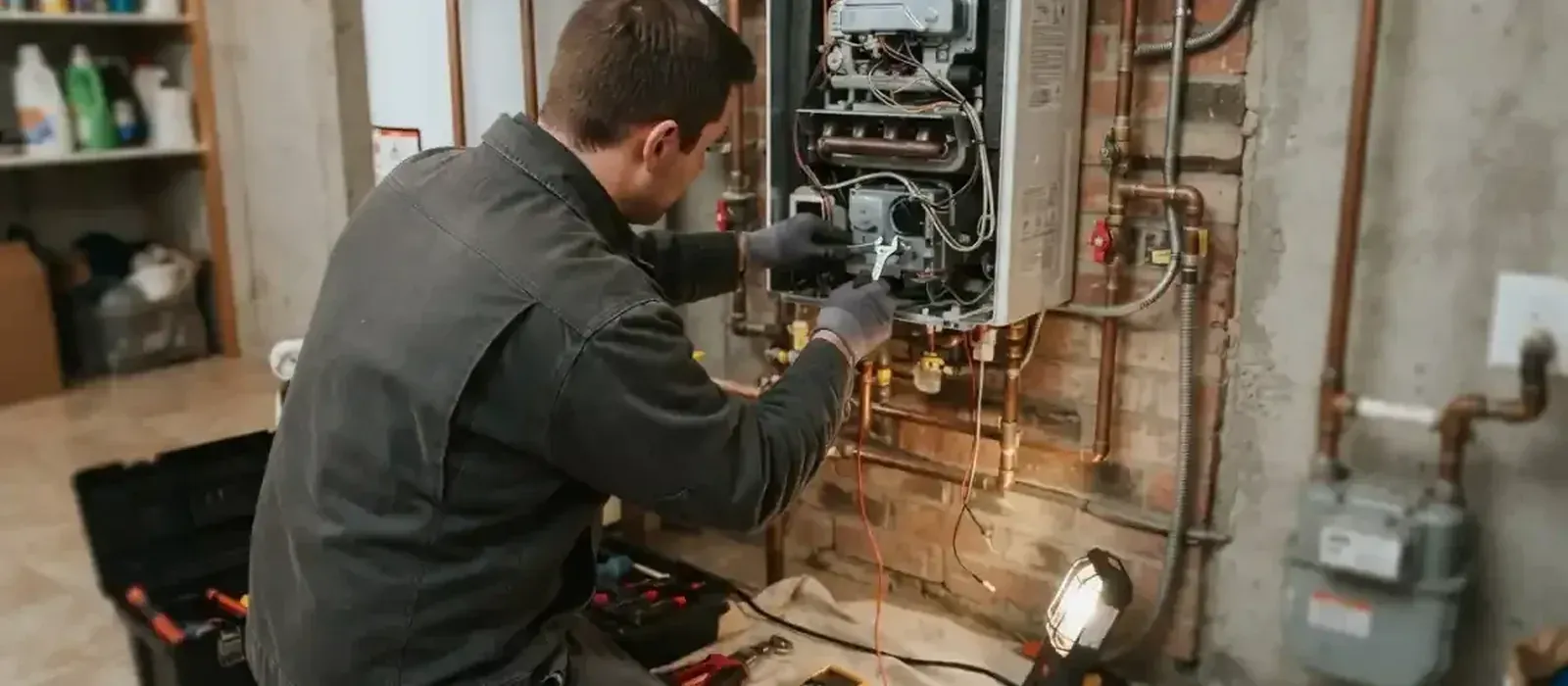
How a boiler repair quote is built
A fair quote has three parts: the time to diagnose, the parts and the labor to install them. Diagnosis comes first because the symptom is rarely the cause. A boiler that short-cycles might need a new sensor, a cleaned burner, a pressure fix or a different thermostat setup.
A plumber who tells you a firm number over the phone without seeing the boiler is guessing. A plumber who looks at the system, tells you what failed and offers choices is doing the job properly. Under Connecticut Department of Consumer Protection guidance, get the details in writing, even when it is urgent.
What moves the price of a boiler repair
These five factors do most of the work in a quote. Knowing them helps you compare two quotes fairly.
Oil or gas: why the fuel changes the bill
An oil-fired boiler has more moving parts to maintain: a burner motor, a fuel pump, a nozzle and a filter, plus a chimney that needs to stay clear. Each is a normal wear item, and each can be the repair. Gas boilers have fewer parts to clean, but their gas valves, igniters and venting need qualified hands.
Neither fuel is cheaper to repair in every case. What matters is the failed part and the boiler's age. Ask the plumber to name the part, say what failed it and explain whether it is likely to fail again soon.
Oil-fired boiler
- Burner, nozzle, fuel pump and filter need regular service
- Soot and incomplete burning are common service findings
- Needs a clear flue and a tank in good condition
- Fuel delivery is separate from your repair visit
- Annual cleaning matters more as the boiler ages
Gas-fired boiler
- Igniter, gas valve and sensors are the usual faults
- Venting and combustion air need a careful check
- Any gas smell means leave and call the gas utility or 911
- Gas fitting work belongs to licensed people only
- Annual service checks combustion and safety controls
Farmington heats with oil more than most plumbers expect
The Census Bureau's 2020 to 2024 American Community Survey puts fuel oil or kerosene at 40.6 percent of Farmington homes, utility gas at 36.2 percent, electricity at 15.3 percent and bottled or tank gas at 6.0 percent. That makes oil the largest single heating fuel in town.
For you, that means a boiler repair call here is often an oil-burner call, so ask whether your plumber works on oil systems before you book. Also check your bill to see whether you have gas service at all, because the answer decides what a replacement would involve.
Source type: Census Bureau ACS 2020 to 2024
How age changes the repair decision
| Boiler age | Typical repair question | What to weigh |
|---|---|---|
| Under 10 years | Part failure, sensor, pump or thermostat | Repair is usually reasonable if the heat exchanger is sound |
| 10 to 20 years | Repeated service calls, aging controls | Compare the repair against how often it has been serviced and the parts outlook |
| Over 20 years | Leaks, corrosion, parts hard to find | A second failure may be close, so weigh a replacement plan |
| Any age with a cracked heat exchanger | Safety issue | Repair is rarely sensible, ask about replacement |
| Any age, no heat in winter | Immediate need | Get heat back first, then plan a longer fix |
Farmington's housing stock gives you a rough guide. The Census data lists a median year built of 1980 and about 25 percent of homes built before 1960. A boiler from the 1980s or earlier is overdue for a serious look, but a well-kept one can outlast a neglected newer unit.
A plumber can check the boiler's data plate for its date and model. If the unit is old enough that parts are scarce, that fact belongs in the quote conversation.
Standards that shape boiler repair quotes
Connecticut's 2022 State Building Code adopts the 2021 International Plumbing Code (IPC), and Connecticut also governs boilers under Chapter 540 regulations. A quote that skips the code items is incomplete, so ask what the plumber checks.
Boiler down and the house getting cold?
A licensed plumber can find the failed part, explain repair options and give you a clear price before work starts. Our 24/7 line is open for no-heat calls.
Annual service and the cost of waiting
Annual service is the cheapest way to avoid an expensive repair. A technician cleans the burner or heat exchanger, checks combustion, tests safety controls, looks over pressure and inspects the flue. Small wear gets caught before it fails on a cold night.
Winter timing raises the stakes. The 1991 to 2020 climate normals for Hartford's Bradley airport, about 20 miles northeast and not Farmington itself, show a January average low of 18.8 F. A boiler that quits in that kind of cold can put pipes at risk if the house cools for long.
What to ask before you accept a quote
Questions that protect you
- What failed, and how do you know? Ask to see the part or hear the test result.
- Is this repair or a workaround? Some fixes get you through the weekend, not the winter.
- What else did you notice? A good tech mentions flue condition, leaks and old valves.
- Is the plumber licensed? Check the license on the state's eLicense lookup (elicense.ct.gov).
- Will there be a permit? Rules vary, so ask the town building department about your job.
Permit rules differ from town to town. In Bristol, the city's permit page says a permit may also be required for plumbing, mechanical or electrical repair or installation, and that the Building Department can answer questions. Farmington's building department inspects plumbing, heating and fire safety, so ask it about your project.
The oil-or-gas question comes up in Avon too. If a leaking boiler is also pushing water toward the floor, our water heater repair page covers a nearby problem that often shows up in the same mechanical room.