
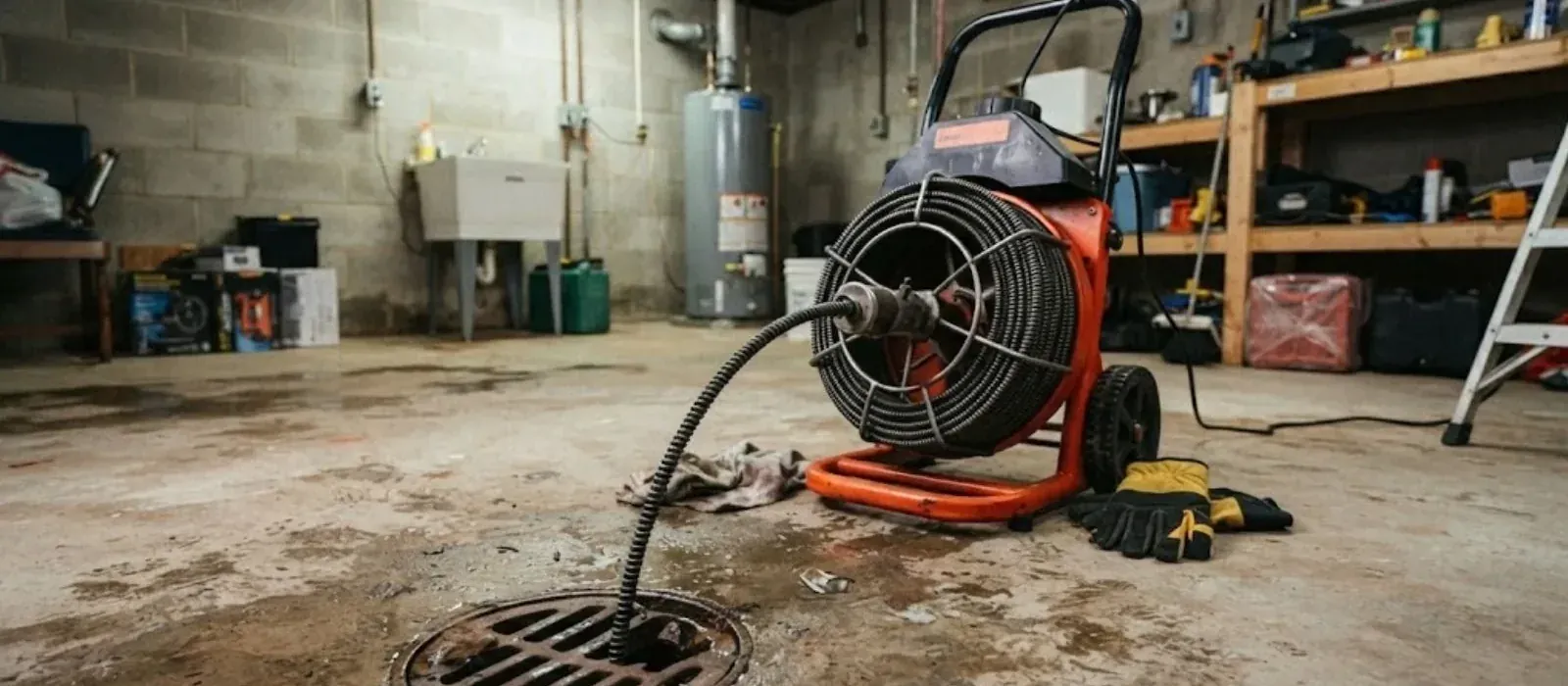
How a bio cleaner is supposed to work
The label on a bio cleaner usually describes live bacterial cultures or enzymes in a liquid or powder. You pour it in, usually at night, and let it sit while the drain is not in use. The organisms feed on the organic film lining the pipe and break it down into smaller pieces that rinse away.
That process depends on contact time. Water that keeps flowing through the drain washes the product away before it can do much. It also depends on there being organic material to eat. Hair, a toy, a wad of paper towel or a section of collapsed pipe is not food.
Treat it as maintenance, not rescue
Bio products fit best in a kitchen drain that is still flowing but a little slow, or as a regular dose to keep grease film from building. Once the drain stops, you need a tool that physically clears the line. Our drain cleaning page covers what that visit looks like.
Where bio cleaners help and where they do not
Helps: slow kitchen drains
A grease and soap film inside a kitchen drain line is the best case. Regular use may slow the rebuild.
Helps: odor from organic film
A sour smell from a seldom-used drain often comes from film in the trap. A bio product can reduce it.
Does not help: hair clogs
Shower and tub clogs are mostly hair held together with soap. Enzymes do not digest a mat of hair quickly, if at all.
Does not help: tree roots
Roots in a sewer line need cutting. A bio product cannot remove them, and neither can a chemical.
Does not help: broken pipe
A cracked, offset or collapsed line holds debris no matter what you pour in. A sewer camera shows the damage.
Does not help: a full backup
If several fixtures are gurgling or a floor drain is filling, the blockage is deeper. Stop pouring and call.
Bio, chemical or cable: how they compare
| Method | Speed | Best for | Main drawback |
|---|---|---|---|
| Bio or enzyme cleaner | Hours to days | Grease film, odor, upkeep on a flowing drain | Does nothing for a solid blockage |
| Chemical drain opener | Minutes | Some soft clogs near a fixture | Harsh on skin and eyes and risky to leave sitting in a stopped drain |
| Drain cable (snake) | Under an hour | Hair, paper, soft blockages in a branch line | Needs the right cable and technique for the pipe |
| Hydro jetting | One visit | Heavy grease, scale and buildup along the whole pipe wall | Not suited to every pipe, a camera check comes first |
Chemical openers are the fastest on the shelf, but they bring risks. If one fails to clear the line, you now have standing water full of caustic liquid. A plumber who opens that drain has to work around it, and splashes can burn.
If you have already poured a chemical cleaner and the drain is still blocked, tell the plumber what you used and when. That is a safety note, not a confession. We would rather know before we put a cable into the trap.
Using a bio product the right way
Start with a flowing drain
If water is standing in the sink, skip the bio product. It will not reach the blockage and it just sits in the basin.
Clear the visible gunk first
Pull the stopper or strainer and wipe out the hair and residue you can reach. Rinse with hot tap water.
Follow the label dose
Use the stated amount, not extra. More product does not mean faster results.
Let it sit overnight
Pour it in before bed and avoid running water, the dishwasher or the disposal until morning.
Repeat on schedule
Bio products work through repeated small doses. If the drain is no better after the label's treatment period, the clog is something else.
What the standards say
Plumbing code guidelines treat a drain as a system: traps, vents and slope all matter, and the 2021 International Plumbing Code (IPC) that Connecticut adopted in 2022 applies to any repair. A cleaner cannot fix a venting or slope problem.
Drain still slow after a week?
A cable or a camera will tell you what a bottle cannot. A licensed plumber can clear the line and tell you what caused it, with a clear price before work starts.
Septic or sewer: what changes in Farmington
Farmington runs a public sewer system through its Water Pollution Control Facility, which reports 150 or more miles of pipe and 17 pumping stations. Where public sewer is available, the town's sewer code makes a new septic system or cesspool unlawful, and stormwater, roof and foundation drains may not connect to the sanitary line.
That matters for drain products in one practical way. A bio cleaner passes into a municipal system and is diluted. It does not replace clearing a blocked lateral, and sump or downspout water does not belong in your sanitary drain.
Sewer rules and septic oversight near Farmington
Farmington's Town Code requires a permit from the Town Engineer to connect a building sewer, a licensed Connecticut drainlayer to install it and an inspection before the trench is backfilled. If you are unsure whether your street is on the public sewer or on septic, ask the Town Engineer before you buy any drain product.
In neighboring Avon, the Farmington Valley Health District regulates septic systems and requires a permit before any part of one is altered or repaired. Farmington is one of the ten towns the district serves, so septic work belongs on its phone list, not just your plumber's.
Source type: municipal code and health district guidance
If you have a septic tank
Bio products are often marketed to septic owners as friendly. The claim that they help a tank is a marketing line, not an official recommendation. Before you add any product, ask the Farmington Valley Health District or a licensed septic professional whether it suits your system.
The bigger septic drain risks are habits: grease down the sink, wipes, harsh chemicals in volume and heavy water use on one day. A tank that needs pumping is a pumping job, not a bottle job.
When the clog is in the sewer lateral, not the drain
If more than one fixture is slow, a floor drain gurgles or sewage smells rise in the basement, the blockage is probably in the main drain or the lateral. In Newington and West Hartford, the Metropolitan District Commission says the homeowner owns and maintains the lateral, and it asks you to call its command center before any work starts.
Farmington's sewer code does not spell out lateral ownership in plain words, so check with the Town Engineer on who handles which part of your line. In every town, a sewer camera shows whether you have roots, a belly in the pipe or a break before anyone digs.